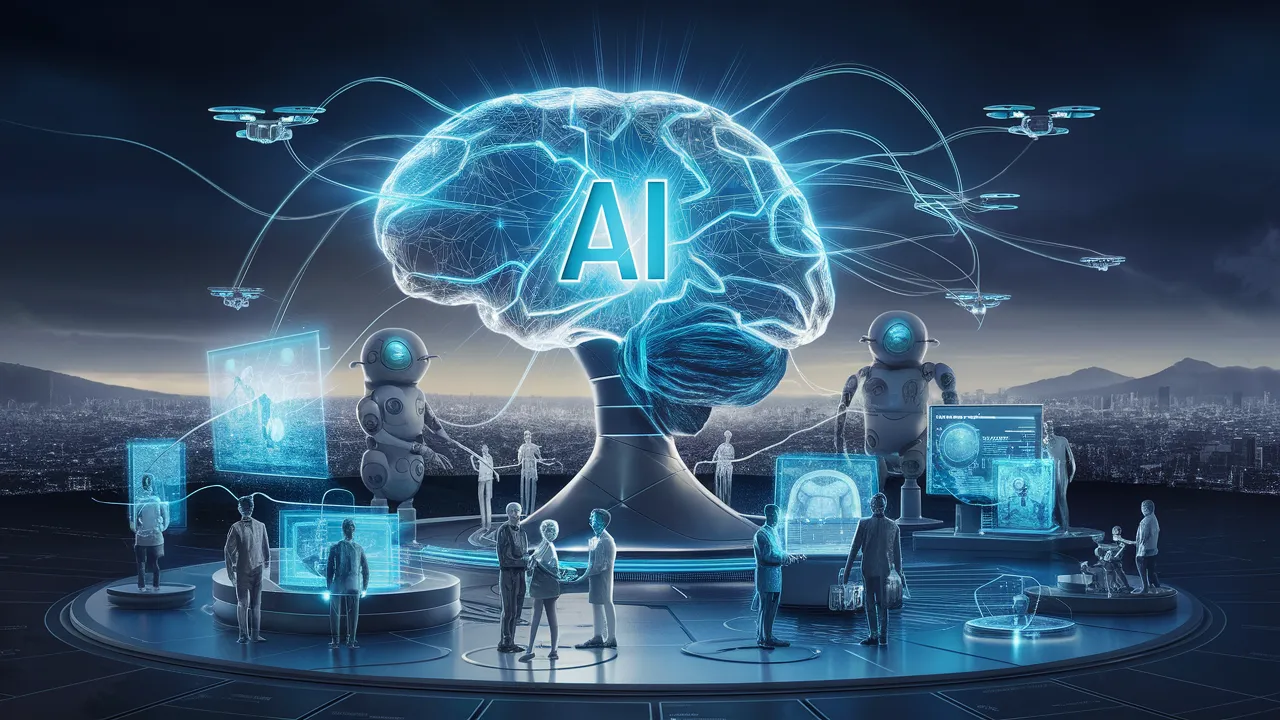
Artificial intelligence (AI) has become a defining technology of the modern world, reshaping industries, economies, and daily life. While its rapid growth brings enormous opportunities for innovation, productivity, and convenience, it also introduces serious challenges that societies must address. Understanding both sides of AI is essential for using it responsibly and maximizing its benefits in the long term.
One of the biggest opportunities AI offers today is the improvement of daily life through automation and personalization. AI systems can learn user behavior and adapt services accordingly, making experiences more efficient and tailored. From digital platforms to lifestyle services, AI helps people save time and make better decisions. Lifestyle-focused platforms such as andreabowenonline.com reflect how modern digital ecosystems are increasingly designed around personalization and intelligent user experiences.
AI also presents strong opportunities in communication and human interaction. Natural language processing allows machines to understand and respond to human speech, enabling voice assistants, chatbots, and translation tools that break language barriers. This makes global communication easier and more accessible than ever before. At the same time, conversational AI systems discussed in communities such as sockpuppetasylum.com show how human-machine interaction is becoming more natural and widely integrated into everyday digital environments.
In the education and skill development sector, AI creates opportunities for personalized learning and faster knowledge acquisition. Intelligent tutoring systems can adapt to individual learning speeds, helping students understand complex topics more effectively. Online learning platforms powered by AI allow users to gain new skills anytime, anywhere. Educational transformation resources such as howtomodawii.com highlight how technology is reshaping learning experiences and making education more flexible and accessible.
AI also provides major opportunities in entertainment and media. From music recommendations to video streaming and content creation tools, AI helps users discover relevant content quickly and efficiently. It also assists creators in editing, designing, and producing high-quality material with less effort. Entertainment and media engagement platforms like markoutmoments.com reflect how AI is enhancing digital experiences and changing how audiences interact with content.
In the fitness and wellness industry, AI is helping individuals achieve healthier lifestyles through personalized training programs, diet recommendations, and performance tracking. These systems analyze user data and provide real-time feedback, making it easier to maintain health goals. Fitness communities such as zumbaintoronto.com demonstrate how digital tools are becoming more interactive and supportive of physical well-being.
AI is also transforming creative industries such as photography, design, and digital media production. Tools powered by AI can enhance images, suggest edits, and automate complex creative processes, allowing creators to focus more on artistic direction. Creative technology platforms such as makeupmodecamera.com show how AI is expanding creative possibilities and making professional-quality tools more accessible to everyday users.
In sports and performance analysis, AI helps athletes and coaches improve training outcomes by analyzing movement, performance metrics, and game strategies. These insights allow for better preparation and reduced injury risk. Sports-focused platforms such as ballcontroloffense.com highlight how data-driven systems are improving performance and strategy development in competitive environments.
Despite these advantages, AI also presents significant challenges. One of the most important concerns is job displacement, as automation replaces certain repetitive tasks traditionally performed by humans. While AI creates new job opportunities, it also requires workers to adapt and learn new skills. Another major challenge is inequality, as not all individuals or organizations have equal access to advanced AI technologies.
Data privacy is another serious issue. AI systems rely on large amounts of personal data to function effectively, which raises concerns about how this data is collected, stored, and used. Ensuring transparency and security is essential to maintaining user trust. Digital platforms such as nuffdownload.com reflect how data-driven systems must balance convenience with strong privacy protections.
There are also ethical concerns surrounding bias and fairness. If AI systems are trained on biased data, they can produce unfair or inaccurate outcomes. This makes it essential for developers and organizations to regularly monitor and improve AI models. Without proper oversight, AI can unintentionally reinforce existing inequalities in society.
Another challenge is overdependence on technology. As AI becomes more integrated into daily life, there is a risk that individuals may rely too heavily on automated systems, reducing critical thinking and human judgment. Maintaining a balance between human decision-making and machine assistance is crucial for long-term sustainability.
On the societal level, AI also influences how people consume information and engage with media. While it improves accessibility and personalization, it can also contribute to misinformation or algorithm-driven echo chambers. Media and communication platforms such as yuzamaju.com reflect how digital systems shape content exposure and user perception in complex ways.
Additionally, AI has a growing impact on governance, regulation, and public trust. Governments must develop policies that encourage innovation while protecting citizens from misuse. Media and awareness platforms such as radiofreenation.net highlight how digital information systems are increasingly influencing public opinion and societal awareness.
In conclusion, AI in the modern world presents both powerful opportunities and important challenges. It enhances productivity, improves communication, supports learning, and drives innovation across industries. At the same time, it raises concerns related to privacy, ethics, employment, and social balance. The future of AI depends on how responsibly it is developed and used. With proper regulation, awareness, and ethical design, AI can continue to be a force that benefits both individuals and society as a whole.